
ABOUT PRODUCT
JB-9 Rebar Couplers - Bar Lock
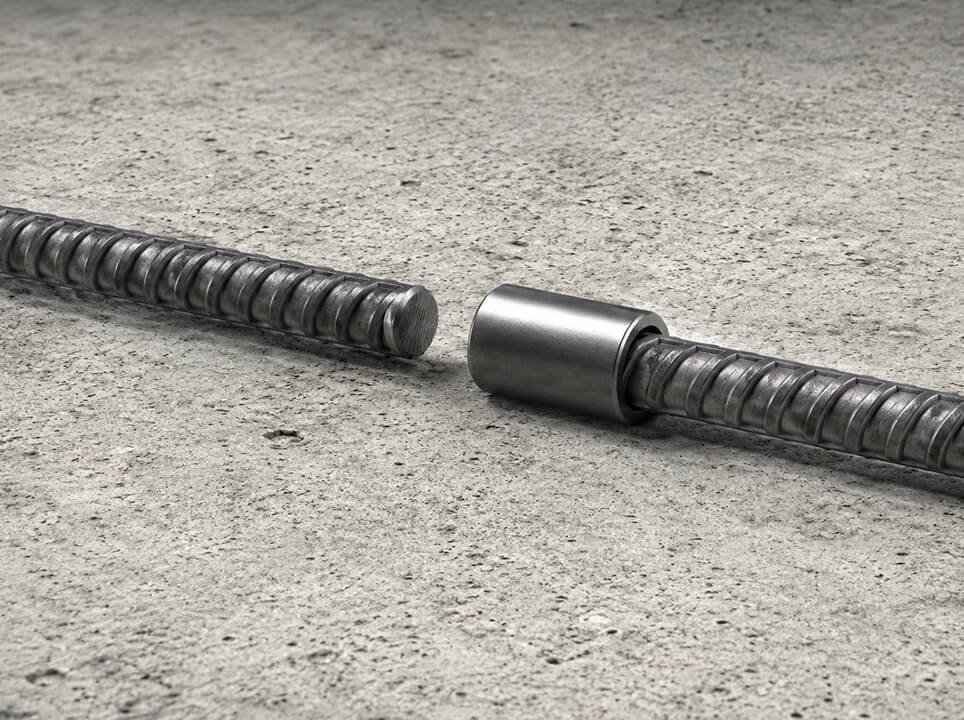
Rebar couplers replace standard rebar lap joints in reinforced-concrete structures. They are also suitable for reinforced-concrete columns and walls. Each rebar coupler consists of a piece of rebar with a threaded end and a coupler sleeve installed on the right side during installation. Rebar couplers can replace all rebar passing through formwork at construction joints. Historically, lap splicing has been the primary method of load transfer between reinforcement bars.
In modern construction, where structural integrity and efficiency are paramount, traditional lapping methods often fall short.
JB Engineering Rebar Couplers offer an advanced mechanical splicing solution, delivering seamless load transfer and uncompromised strength across reinforced concrete structures.

Quick and easy to install

High strength in tension, compression, and seismic applications

No special installation equipment required

Available in standard, transition, and weldable versions (8-50 mm)

Ideal for new construction and rehabilitation projects
loads are transferred directly bar-to-bar rather than through concrete bond.
fewer overlaps mean better concrete placement and compaction.
designed to perform under dynamic or high-stress conditions, maintaining ductility and avoiding brittle failure.
less steel use, faster installation, fewer joints to inspect.
suitable for rebars from 8 mm to 50 mm, standard, transition and weldable versions.

Rebar continuity – ensures reliable reinforcement without relying on concrete bond.

Avoidance of transverse splitting forces – ideal for large rebar diameters to prevent splitting and dowel action forces.

Reduction of rebar congestion – easier concrete placement and compaction.

Safety – enhances site safety by eliminating on-site welding.

Ease of construction – simplifies assembly of prefabricated cages.

Reduction in steel use – reduces steel consumption by approximately the lap length.

Seismic use – safer for seismically designed structures, maintaining ductility and preventing brittle failure.
Rebar couplers replace standard rebar lap joints in reinforced-concrete structures. They are also suitable for reinforced-concrete columns and walls.
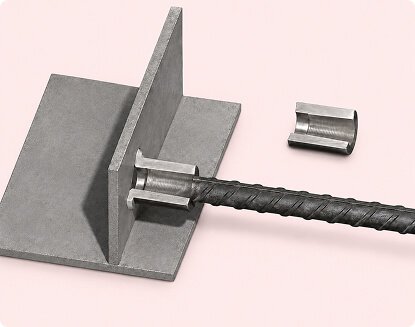
Designed to connect reinforcement bars to structural steel sections or plates. One end features an internal taper thread for rebar connection, while the other end is specially prepared for secure welding.
Provides a strong mechanical connection between two reinforcing bars using a threaded sleeve, ensuring reliable load transfer and structural continuity in concrete applications.
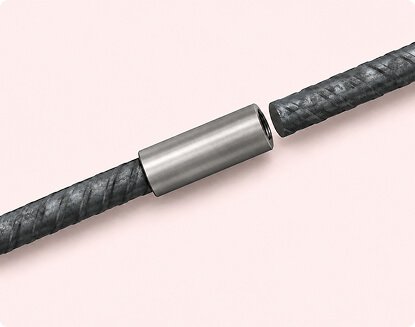
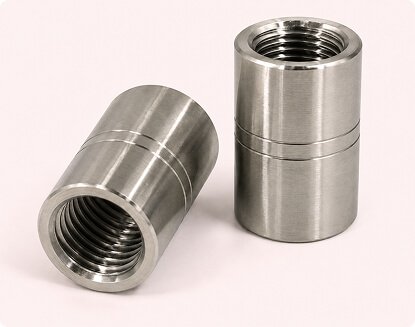
Installed on threaded bar ends and tightened on-site using a calibrated torque wrench, ensuring precise engagement and high-performance connections.
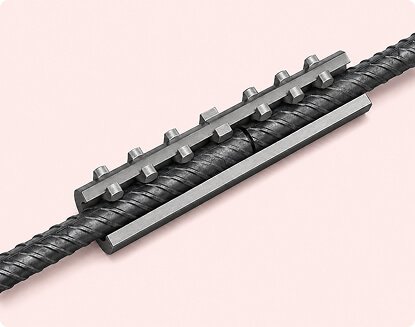
A convenient solution that requires no bar end preparation. Lock-shear bolts securely grip the rebar, creating a strong and reliable mechanical connection.
JB Engineering manufactures rebar couplers ensuring continuity, reduced congestion, and steel savings up to 25%. Certified bar-break couplers maintain ductility even under seismic load. JB Engineering Rock Bolts are among the largest manufacturers and exporters of Self Drilling Anchor Bolt Systems in India.
01. What are JB-9 Rebar Couplers – Bar Lock used for?
They are used to mechanically connect reinforcement bars in reinforced concrete structures.
02. What bar sizes can be used with these couplers?
JB-9 couplers are suitable for reinforcement bars ranging from 8 mm to 50 mm diameter.
03. Do Bar Lock couplers require threading?
No. These couplers use lock-shear bolts and grip rails to secure reinforcement bars without threading.
04. Are Bar Lock couplers suitable for seismic structures?
Yes. Mechanical couplers maintain reinforcement continuity and structural ductility, making them suitable for seismic applications.
05. Where are JB-9 Rebar Couplers commonly used?
They are widely used in buildings, bridges, tunnels, dams, and infrastructure projects where strong reinforcement connections are required.